
We share space, for now
but you’re not in my orbit;
just a passing star.

Writing about the creative life and the stories all around us
We share space, for now
but you’re not in my orbit;
just a passing star.

He is at work. Wednesday comes.
Hey, we’re off to the pub. Coming?
Sure. Why not.
Football scores. Office politics. The girl in the corner wearing blue.
Nothing to say. Sips a beer. No response to desperate glances.
Must be getting home or there’ll be hell to pay, right?
Right.
He is at work. Friday comes.
TGIF, am I right?
Right.
She’s got my weekend booked up, shopping and a BBQ, groan. You?
Nothing much.
I wish.
Three beers and Netflix. Pizza delivery. Quiet bed.
He is at work. Monday comes.
So busy this weekend, didn’t have a minute to myself. How about you?
Oh, you know. Quiet.
You’re lucky, time to yourself.
Yes. Lucky me.
Friday can’t come quick enough, am I right?
Right.
He is quiet. No trouble. No drama.
No sun. Engulfed by eternal cloud, muffled, numb.
Rain drips icy fingers down his neck, freezing his bones.
Invisible, lost, a lone wolf.
Teeth ripping at his own heart.
A final scream, choked. Unheard.
None to sing his elegy.
but what if they don’t?

Characters have a life of their own — or they should. Most writers know the feeling of writing something that seemed to come from the mouth of their creation, bypassing the writer’s mind entirely. Or breathlessly chasing words and images that play like a film going at double speed, hoping that fingers can keep up.
You could call it flow. You could call it the Muse. You could call it a lucky break.
Reading this piece from Louise Foerster reminded me of a time when my characters deserted me.

My protagonist and antagonist were about to face off for the last time, but I didn’t know where and how. Protagonist didn’t want to do it, so naturally he was no help.
“It’s not fair,” Protag grumbled. “Didn’t I beat this guy already? Wasn’t that enough?”
The novel ground to a halt. In line with my less is more approach to worldbuilding, I don’t complete huge lists of traits for my characters. Much more important than their childhood pet or favourite colour, their personalities and choices are my focus. No short cuts there.
I was stuck.
Interview with the Bad Guy
Protag sulked. Antagonist stared out of the window, eyes fixed on a future only he could see. I decided to take a risk.
“Um, Antagonist? How are you going to win this once and for all? Why will you win?”
He turned his gaze towards me. “I am better and I am right.”
He explained himself fully and precisely, without emotion because that’s his character. It was the infamous villain’s monologue of so many movies and comic books, but before the battleground had even been decided.
I let him speak. I took notes (longhand works better for this kind of exercise.) About three-quarters of the way down the page, the solution came to me. I had to hustle him out of the room and get writing.
“I have more to say, if you would permit — ”
“Thanks so much for your time, but I have an appointment with my laptop. See you soon.”
He sounded disappointed. Not many people listened to him like that; they were all afraid of him. He couldn’t scare me and I’d heard enough.
When you get stuck, interview a character. Interview the bad guy, the bad guy’s chief henchman, the protag’s best friend, the bartender who serves him whisky when things go wrong. Secondary characters often give a new perspective on the character that rounds him out. Of course, primary and secondary roles are all relative to where you’re standing, as the hero in your own tale.
Sometimes problem solving needs a different approach. The answer is within you. This is a way to coax it out of hiding.
There are secrets at the heart of every story; there is something that must be uncovered or discovered, both by the reader and by the characters.
Hannah Kent

glances across the room slide away half smiles
(gravitating into orbit)
pulse stutters close enough to touch don’t
(slide fingertips against my palm)
warm breath against my neck goosebumps bloom
(close the distance cross the line)
exploring gentle passion
(see taste savour)
dance a sensual tango back and forth
(push pull resist yield)
all of me and more
(take everything)
together let’s uncover
hidden treasures off the map
and using them to drive creativity

I’m back on the beach again, metaphorically rather than literally. Beaches and the sea feature prominently in my writing, and I didn’t even know.
It all started with a chance remark from a writer friend. She read a short story of mine and commented, “Be careful what you wish for seems to be a theme in your stories.”
“Huh,” I replied.
That got me thinking. I’ve contributed two stories to anthologies based on a deal with the devil, another about a wish come horribly true, and just completed a ghost story with an implied wish embedded in the protagonist’s motivation.
Then in my IRL poetry group, another poet asked if I deliberately included the sea in my poems, because beaches often came up in them.
“Huh,” I replied again.
Beaches inspired my prize winning story All the sands that touch the sea. Beaches and the sea inspired poems like All love in a day and blog posts like Forever summer and Flying free and many more. I realised that the ocean figured in about a third of my works that year.
Hiding in plain sight are ideas or beliefs that underpin some if not all of my work. The question is, what does the sea or beaches mean to me? And how can I use it to my advantage?
Theme in writing
The theme of a story is what the author is trying to convey — in other words, the central idea of the story. Short stories often have just one theme, whereas novels usually have multiple themes. The theme of a story is woven all the way through the story, and the characters’ actions, interactions, and motivations all reflect the story’s theme.
Cliff’s notes
In well written stories, theme gives a satisfying sense of ‘I know what that was all about’ in terms of universal ideas like love conquers all or family comes first. Theme is separate to plot or what happens and where. Love can conquer all in any number of different settings.
Conversely, a story without a theme, even if well written with engaging characters, leaves the reader wondering ‘so what?’ And a story written to a specific theme can come over as preachy, especially when political or religious. The reader feels they’ve been beaten over the head with a blunt instrument.
Discovering your values
Most of us don’t examine our core beliefs on a regular basis, if ever. As writers hoping to illuminate the human condition through stories, it might be useful to our selves and to our readers to dig a little deeper into the beliefs that drive our behaviour. We might ask ourselves questions like
Looking a little deeper at the answers will help you understand yourself and what guides your choices. And of course in fiction, you can use values to build a compelling character who behaves like a real person in the story. A list of useful questions to ask and a summary of values can be found here at mindtools.com.
Using theme to your advantage
Sometimes the theme is only seen when looking back at a work. During the first draft our job is to tell ourselves the story, as Terry Pratchett said. After a break, re-reading the story should reveal its point, if you didn’t write with one in mind. It might be something unexpected. Your job then is to strengthen the theme using subtle hints in characterisation and dialogue, so that the narrative hangs together. On the other hand, if theme is too obvious, it may need toning down so that it fades into the background.
If genre is an ocean and plot is the wind steering the boat of characters, they can change course by their actions. But the theme is like a deep ocean current that will bring them to a particular destination, even though they can’t see it.
There’s the sea again
Why does the sea reappear in my work? The beach is a boundary combining air, earth and water aspects of nature. It represents transformation, endings and beginnings, awe and fear at the power of the sea, creation/birth vs. destruction/death. For me it also represents time, childhood, escape. All this and more, before even considering the symbology of water itself.
I use my sea theme to help me with new works. A new story takes shape more easily once I have a setting. I might set the story on the beach or at sea; or use the idea of a liminal space to come up with a supernatural tale. I have woven memories into beach stories.
Whether it is romance, SFF, magic realism or anything else, be careful what you wish for is another goal to work towards. This is especially good for short stories or poems with a single theme. There are many different ways in which this might play out. Not all involve a deal with a devil, but that does make for a good tale.
New directions
I don’t want to keep writing the same story though. So periodically I have a look at my values again. They change in importance and evolve as my life does, and my art should reflect that. And that is one of my personal values.
If we don’t change, we don’t grow. If we don’t grow, we aren’t really living.
Gail Sheehy
Look at your works, or better yet ask someone else to read them, and see if a recurring idea or value reveals itself. You may be surprised. Then have a go at a new piece, keeping your theme in mind.

Every story needs a setting — but how much?
One of the first things we need to know on starting a story is its setting. As well as establishing protagonist and stakes, the place where events happen must be known. A story without a clear setting floats around and is difficult to enter fully. If your reader scratches her head and asks herself “where are they again?” she steps outside the fictive dream. You’ve lost her.
The main elements of setting
The amount of detail needed varies. A contemporary short story may establish setting with a few words, especially if it is familiar to the reader. A novel needs more, particularly for historical fiction, science fiction and fantasy (SFF). The reader needs more depth to ground themselves in a world distanced by time or imagination.
Setting can be a character in itself. Consider the bleak post-apocalyptic wasteland of Cormac McCarthy’s The Road; Aliette de Bodard’s ancient, sinister Paris devastated by magic wars in The House of Shattered Wings; or the drowned Southern States of Sherri L Smith’s Orleans. In all these books place is not only evoked, it acts on the characters and forces them to make choices.
SFF is my favourite genre to read and write. No doubt I will be accused of poor worldbuilding, but I fall into the camp of less is more. (Maybe it’s my poet’s ear, seeking economy of expression and spaces for interpretation.)
Talking to another writer recently, I was vocal in my dislike of huge prologues, maps on both endpapers, long lists of characters and noble houses and relationships…yawn. Just give me the story already.
She, however, loves all the details. And so do many other readers. They enjoy minute descriptions of magic systems, exactly imagined terrain, and a catalogue of interior furnishings.
Historical fiction relies on accurately depicting a lost time. Research is essential but on the page, in a long description of how a nineteenth century cotton mill works, it screams info dump.
Unless it’s relevant to the moment, leave it in backstory. Just as we don’t need to flesh out soldier number 6 who doesn’t speak, we don’t need to describe goblets and gizmos in detail. If setting is in the background, let’s leave it there. We can fill in using imagination, if we want.
Setting is important
but in the end only two things matter:
what the characters are doing
and
what happened next.
Minimalist or maximalist; which camp do you fall in?

listen:
celebrate the blooms
turning pure faces skyward
such dazzling beauty
has roots sunk deep in darkness
decay transformed into life

God, I hate revision. Going over and over the same stuff is so boring, like spinning your wheels. I need to pass this exam though, if I’m going to get out of here. I don’t want to mess up now, when I’m so close. If I can get through this advanced astrophysics I’ll be set.
Wonder how my parents will adjust when I’m gone? I can’t afford to let that derail me though. They’ll probably be glad to have some time together without me bugging them for yet another college course, and another. I think Dad is quietly proud though he never says so. Overheard him praising me to his friend on the visilink. That just increases the pressure, but I can do this. There’s much worse to come if I’m admitted to Academy.
Diamonds are formed under pressure, Mum says. That’s all very well, but what about the carbon lumps that crumbled, the ones that didn’t make it? They ended up as dust, and nobody cares about dust. It’s unremarkable, unless it gets through the envirofilters. Then it’s important all right, something that gets in the way and spoils the balance of the atmosphere. It’s something to be disposed of.
I want to be a diamond. I want to shine bright. But first I have to ace this test, and I can’t ask Ansel for help again. He thinks he’s so great at cosmology, and he is. That’s my weakness, but space physics and high-energy astrophysics are my playgrounds, plus dad’s tutored me in some biotech. Ansel doesn’t know that. Nobody really knows what’s out there, or what skills we’ll need. It’s best to diversify. Ansel never asks for my help. He underestimates me.
If I get in to Space Academy I’ll have to leave my home. If I graduate I’ll have to leave the planet that’s my home. I don’t know how to feel about that, but staying here, relying on envirofilters and a dying planet, is not an option. When they ask I’ll tell them yes. I’m ready to move beyond the red clouds.
Must be time to give up, the lights are on which means it’s dark outside. Mum said that before the Dustbowl era, residences had windows you could look through and open. What madness. How could you possibly maintain atmospheric homeostasis and structural integrity? What was there to see?
It should be okay to log in to the feed from Voyager 27 now. One day I might be orbiting one of the planets it has passed so far. One day, humans might have a new home.
They say we’re made of stars, that many of the compounds needed for life arrived here on meteors. Stars seem so distant and brilliant, and our lives here on this little blue planet are miniscule and messy by comparison.
Maybe we got the bits that space didn’t want, and like a good homemaker Earth made the best of a thin selection of ingredients. And now we’re going shopping for more. Who knows what we’ll find out there.

In May 2018 I published every day on Medium (and my personal blog 2squarewriting.) I blogged about the results here.
Then Courtney Corboy reached out to ask, how did I choose what to write about? That sparked this post.
In preparing for battle I have always found that plans are useless, but planning is indispensable.
D. Eisenhower
As the picture shows, the plan did not survive intact, but I won the battle. That’s the only thing that matters. What to write depends on what kind of writer you are, and what you hope to achieve. When I did the same challenge last year, I had less time and energy. Simply finishing was the aim. This year I wanted to test out different content, and see how publishing in publications changed the results. I was confident I could finish, because I’d done it before.
Bullet journals and spreadsheets are great, but they don’t work for me. And that’s okay. Messy can work too.
You may have a theme that informs your posts, for example self development or parenting or living with an illness. You can find a niche within these umbrellas; single parenting, self development for retirees, or life with anxiety. Even so, you might run out of steam. The trick here is to write what interests you, seen through the lens of your theme. How does a single parent navigate dating? What does the latest political event mean for a person with anxiety?
Everything has been said, over and over. There is no such thing as originality. But it hasn’t been said by you, with your unique experience and perspective.Especially when first blogging, there’s a lot to be said for using other writing as your springboard.
You can only find your voice by using it, and imitation is a great start. Even Picasso began by copying the great masters such as Rafael. The more you write, the better your skills. Let your personality come through. By sharing we create connection. What we are comfortable to share will vary by subject and individual. Readers want and appreciate honesty.
Whenever you have a question or an idea, capture it. You won’t remember it in five minutes or a day’s time. Notebooks are great, and lots of writers love their physical notebook and pen. The notes function on your phone is practical, and more importantly, usually at hand. Even if it’s just a title, grab it. One day when you’re out of ideas, you can look at notes and a few words can spark a whole piece.
Ah yes, the original question. Anything at all. I please myself. I don’t have a huge following to service, and I want to gather people who like what I write. I write fiction and poetry, and I write about writing, and about life in general, sometimes as it pertains to writing.
But what I write is not just about me once I hit publish. So it must fill a need for someone else; inform, entertain, or problem solve. (Fiction can do all three, but that’s a post for another time.)
See what’s trending on Medium or Quora, and write your own take on it.
Look at the blogs of writers you admire, and see how they address their niche. Notice how their personalities come through, how much personal stuff they share. Think about where you’d like to be on the open — closed spectrum.
Keep your eyes open when you’re away from the screen. Turn the irritation of sitting in traffic into your thoughts on public transport, or electric cars, or how hard it is to meditate in real life.
Challenge yourself to come up with ideas every day. It gets easier with practice, like every skill.
It does not have to be big. Haikus are just seventeen syllables long, and usually fewer words. In this case the image I choose is very important, and must convey more than the words while complementing them.
My non fiction pieces are often short, from three hundred to a thousand words. I edit ruthlessly. That’s another skill I’ve improved upon.
You can re-use old content. Rewrite if needed, update facts, and you’re good to go. And edit!
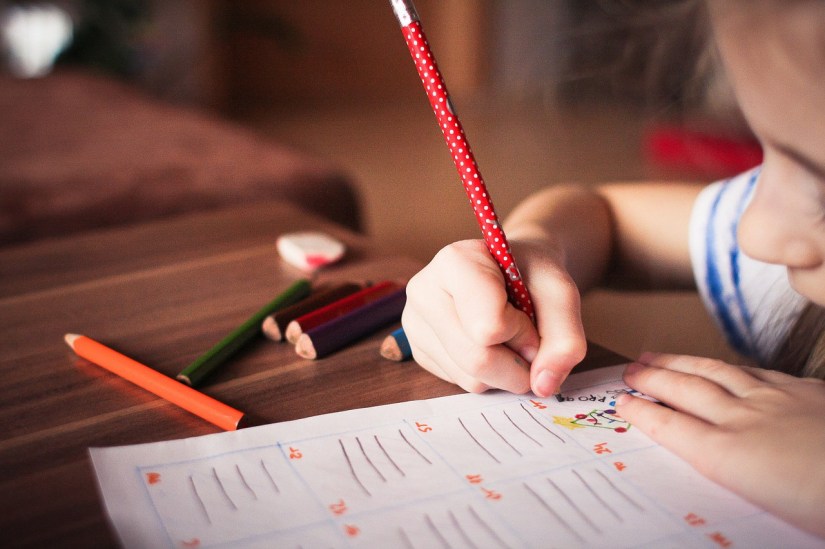
You can’t use up creativity. The more you use, the more you have.
Maya Angelou

Those who cannot remember the past are condemned to repeat it.
George Santayana
listen:
The lessons of the past are clear to see
on pages dripping with blood shed in vain
and still we can’t escape our history.
When no-one questions how we come to be
repeating ancient wrongs, one truth remains;
the lessons of the past are clear to see.
A genocide becomes legal decree
some disbelieve an innocent’s refrain
and still we can’t escape our history.
When facts are fake, debased commodity
and Orwell’s warnings are chillingly plain
the lessons of the past are clear to see.
Complicit, distant, blind to misery
we turn away and shrug, not this again
and still we can’t escape our history.
It’s too easy to say it wasn’t me;
I’m not responsible for all this pain.
The lessons of the past are clear to see
yet still we can’t escape our history.