blog, creativity, self improvement

Reboot Your Dreams To Get More Out Of Life

Photo by Paulin on Unsplash

Kids these days, huh?

They have it so much easier than you and I do, caught up in the humdrum world of adulthood. It makes you angry, how carefree and downright dreamy they are.

Under the anger lies envy. You long for something you lost long before you could even really appreciate it, and now you can’t see how to get it back.

Parents and teachers told you not to waste your time dreaming, because it doesn’t lead anywhere. They told you success comes from hard work here in the real world, doing serious jobs. You took that lesson to heart, put your head down and became realistic about what you could achieve.

You were caught in a trap and told it was the right place to be.

But your dreams didn’t go away completely. Occasionally you glimpse them out of the corner of your eye, when your brain drifts in a boring meeting or long commute. Sometimes the sight of someone else living your dream makes you envious or sad, and you can’t fully explain why.

You know, deep down, something’s missing from your life.

An Imaginary World

Imagination is the beginning of creation. You imagine what you desire, you will what you imagine and at last you create what you will.
George Bernard Shaw

None of the technological and artistic advances we now enjoy were created purely by realists.

Sure, when it comes to implementation, refinement, and exploitation, a concrete approach is essential. But concrete builds solid foundations. It does not let us fly.

Everything that exists in the world begins as an idea. An idea can be as expansive as your imagination. In other words, ideas are limitless. Work must be done to manifest ideas in the real world, but dreaming is free.

Realism doesn’t produce innovation, it produces incremental improvement. To make something new, you must first dream a new dream. That’s how the world got cars, airplanes, telephones, computers, and video games.

That’s how you’ll get where you want to be.

Put Away Childish Things

It’s never too late to have a happy childhood.
Berkeley Breathed

When you decide how to behave in a given situation, the voices of caregivers and authority figures loop endlessly, and often unrecognised, in your inner conversation.

Your father no longer scares you so badly you can’t look him in the eye, but when faced by an aggressive manager that’s exactly what you do — without thinking. And you wonder why you can’t assert yourself.

School days are far behind you, but when you browse painting sets online your old art teacher whispers that you have no talent. And instead of wondering why you’re looking at paints, you click away. That’s not for me, you say.

Here’s the thing. You’re an adult now. No-one is the boss of you.

You get to decide how you act at all times, and you take responsibility for your actions. At some point, you need to stop blaming parents, caregivers, teachers or others in your past for how you respond to life now.

The past experiences and attached emotions that make up so much of your inner self-talk are no more than an outdated script. When you realise that your reaction today is based on the memory of a conversation that’s decades old, you can escape your past.

That was then and this is now. You can choose to respond differently and write a new script.

That’s when you grow up.

Start Your Second Childhood

The creative adult is the child who survived after the world tried killing them, making them grown up. The creative adult is the child who survived the blandness of schooling, the unhelpful words of bad teachers, and the nay-saying ways of the world. The creative adult is in essence simply that, a child.
Julian Fleron

You’ve had your share of bad experiences that have shaped your life. Now it’s time to turn the page and write a new chapter with new rules. Acknowledge what feels bad and let it show you where you need to seek something better.

This means rediscovering your inner child. Try books from this list to guide your journey. Or let go of your old programming and try something new, like the artist dates described in Julia Cameron’s book The Artist’s Way.

We are all innately creative. You can be a functional adult and still retain childlike wonder and creative flow. Both are essential to a sense of wholeness.

Photo by JR Korpa on Unsplash

From Reality To Fantasy

Creativity is putting your imagination to work, and it’s produced the most extraordinary results in human culture.
Ken Robinson

Now you know that cultivating dreams is not only good but essential and nobody can tell you otherwise, it’s time to examine what that means for you.

Although dreams look very different on the outside, they can be stripped down to a small number of basic desires.

  • Security: safety, stability
  • Love: belonging, bonding, intimacy
  • Esteem: respect, confidence, achievement
  • Self-actualisation: spontaneity, knowledge, purpose, and meaning

Understanding your underlying drives will help you see whether different approaches to similar goals are right for you.

One person might value respect, another stability. The first is happier writing well-reviewed literary fiction, the other writes copy that sells. Their dreams might look like ‘my novel is featured in The Times Literary Supplement’ versus ‘I support myself by writing for others.’

Both are writers but their dreams lie on different paths. Our desires form a hierarchy of needs and we are happiest when the earlier needs are met before seeking out the higher ones. That might mean putting your dream on hold while you work on strengthening the foundations of life.

Look Inside

This simple visualisation exercise is designed to bring your dream into focus so that you can use it as fuel in the real world. I’m going to talk about writing, but it can be applied to anything you want to create.

Get comfortable and close your eyes. Breathe slowly. Future you has achieved your wildest dream. What do you see?

You’re typing on a new laptop in a cosy study, and your days as a wage slave are behind you. You’re holding a copy of your book in Barnes and Noble. A bus drives past advertising the film of your book.

Now zoom in on specifics. What are you wearing? Is the bubbly in your glass Prosecco or beer or mineral water? Use all your senses. Turn up the brightness and create a vivid picture.

In dreams there are no limits to what you can do.

If you want to be a number one bestselling author, touch the cover of your book. If you want to finish a triathlon, hear the spectators’ cheers. If you want to build a million dollar business, see your signature on the annual accounts below a seven-figure number.

In this place there are no limits to what you can do. And it can only come true if you first create it mentally.

When you have the picture and the feeling that comes with it, associate it with a physical sensation. Pinch your thumb and middle finger together firmly while picturing your dream in all its multicoloured glory.

Practice frequently until you can recall the dream with ease, simply by pressing your thumb and middle finger together.

Great athletes use visualisation to increase their chance of winning. They work towards a clearly defined image of success. They’ve lived it so many times in their minds that it already feels real.

Where Are You Going?

It doesn’t matter where you’re going, as long as the destination matters to you.

Once you have a dream fixed in your mind, check whether your actions move you closer to your goal or away from it. That might mean giving up socialising because you’re training hard, or putting your great novel aside for six months while you concentrate on financial stability.

Sometimes the way forwards is sideways or even backwards. As long as you stay pointed at that wonderful dream destination, you can still make it.

Either way, you’re in charge. You own your decisions and their consequences. You stop making excuses. Your destiny is in your hands.

Go get it.

blog, self improvement

Sitting on the Sidelines: How to Defeat The Insidious Rise of Do Nothing Culture

woman eating popcorn holding remote control
Photo by JESHOOTS.COM on Unsplash

I think the love-hate is fundamental. Everyone hates reality television, and everyone’s watching it.
Bo Burnham

Did you watch any reality TV this week? Whether drag queens on a catwalk, crab fishermen in a storm or brides choosing a wedding dress, these programmes are everywhere. They feature “real” people and film their reactions in varying situations.

In the UK there’s even a reality programme showing people at home reacting to TV shows, which is either very, very meta or imaginatively bankrupt. Not only is it popular, but more than one of the featured participants has gone on to (short-lived) solo TV careers.

Harmless fun and entertainment, right? But these programmes can be anything but. Reality TV can harm your health whether you’re on screen or in front of it.

In pursuit of viewers, participants are manipulated and stressed to exaggerate their responses.

Further manipulation takes place in editing so that the finished product bears little relation to the events as they happened.

My friend was featured on a house renovation show. She and her family were split up, kept waiting in different rooms, and denied opportunities for rest. There was no escaping the cameras.

Her partner was encouraged to have a beer in the garden at the end of a very long day, and the programme presented him as a disinterested drinker. Neither found the experience a positive one overall.

But you’ve had a hard day and you deserve some downtime. Why overthink things?

Watching The Box

I’m capable of living in the moment. And I’m especially capable of living in the moment of sitting on my sofa and watching other people’s moments.
Samantha Bee

We’re watching a lot of TV. The 2017 US average TV viewing time figures show Americans watch 7 hours 50 minutes per day, while the 2018 UK average was 22 hours per week. These figures don’t include streaming and social media use.

Watching TV is a passive activity that gives the illusion of participation.

Programmes showing rugged men diving for gold or surviving inhospitable terrain cater to particular views of masculinity. Programmes showing sexy twenty-somethings in skimpy clothing cater to particular views of femininity and relationships.

When the camera zeroes in on faces to show every micro-expression, you’re invited to feel the same emotions. When the tough guy swims across an icy lake and builds a shelter out of pine branches, you’re invited to feel that you too are braving the elements in a primal struggle for survival. Mirror neurons fire in your brain to make you feel as if you were there.

But you’re sitting on your couch, warm and safe, with snacks to hand. You’re not there and the supposed experience is an illusion.

The show-runners respond to our inevitable habituation by turning up the pressure; less time, bigger challenges, more remote islands, surprise evictions.

It’s the modern version of bread and circuses, in which the audience is promised ever more dangerous animals for the gladiators to face. The blood on the floor is all part of the show.

What happens to those reality gladiators and us, their audience, afterwards?

Fifteen Minutes and After

You will soon break the bow if you keep it always stretched.
Norman Vincent Peale

Contestants can struggle after the camera moves on. The unrelenting pressure to perform and keep strong emotions near the surface can amount to abuse, hazardous to even the strongest personality.

We don’t often hear about the dark side of reality TVSuicide of a cast member becomes fodder for the mill because “any publicity is good publicity.” Some argue that abusive relationships are being normalised by shows that present a human being as a prize to be contested and claimed, leaving the others as failures.

For you as a viewer, artificially evoked empathy for the unsuccessful contestant is fleeting and dulls your true responses. When we dismiss on-screen emotion as fake, our cynicism can spill over into real life.

At its worst, observation culture hurts all of us. We watch, we are numbed by over-exposure, and we are caught in the illusion of participation.

At its best, observation culture can enrich your life. You just need to approach it differently.

Watch and Learn

Life is not a spectator sport. If you’re going to spend your whole life in the grandstand just watching what goes on, in my opinion you’re wasting your life.
Jackie Robinson

There’s nothing wrong with watching reality TV or any other shows. As in so much of life, moderation is key. Sometimes you really need to relax and let your mind drift.

The less challenge and hazard we face in modern life, the more we’re spoon-fed distant dangers to compensate. But watching someone else climb a mountain can’t build your muscles, and you can’t eat that delicious meal on the screen.

Don’t fall for the magic trick which confuses observing with doing. Use your favourite show as inspiration for actual activity in the real world. Get off the couch and try it.

If you like cookery shows, try new recipes. Maybe you can’t cook a gourmet meal yet, but you could enjoy a new recipe or make your own bread.

If you watch survival, go hiking. You don’t have to fight off a bear or eat bugs to enjoy the fresh air and stretch your legs.

If you watch shows that hook you with strongly expressed emotion, remember those emotions are often the result of being stressed and cornered and filmed in HD for hours on end. People are more than characters in a soap opera; and actual soaps, movies and books exist to fill your need for empathywithout pushing real people to their limits and beyond.

Plan a trip somewhere you’ve never been. My trips to Lapland and Iceland were inspired by snowy Swedish landscapes in a programme featuring Ray Mears, a noted British survival expert. It sparked something in my heart I couldn’t forget. Because of that show, I drove a snowmobile, visited the original Ice Hotel, and experienced a blizzard on a glacier. And my children have never forgotten the thrill of husky sledding.

Now when I see these countries on TV, I recall wonderful memories. I was there; I know what the cold is like, and that makes me appreciate my central heating and plush sofa all the more.

Part of the reason watching TV is ultimately hollow is because you don’t participate. Your body knows the difference between muscle relaxation after actual activity and slumped tension after hours on the sofa.

Your favourite reality show can be more than entertainment; it can signpost a way out of boredom and disengagement. The things you yearn to do and the places you want to see are often right in front of you, disguised as passive entertainment choices.

As Halliday said in Ready Player One, people need to spend time in the real world because reality is the only thing that’s real.

By all means, rest in front of the box. Learn something new. But after that, go find a way to experience life.

To learn and not to do is really not to learn. To know and not to do is really not to know.
Stephen Covey


blog, productivity, self improvement

How to Turn Surprisingly Small Actions Into Dramatically Better Results

clouds dawn lake landscape
Photo by Pixabay on Pexels.com

Someone is sitting in the shade today because someone planted a tree a long time ago.
Warren Buffett

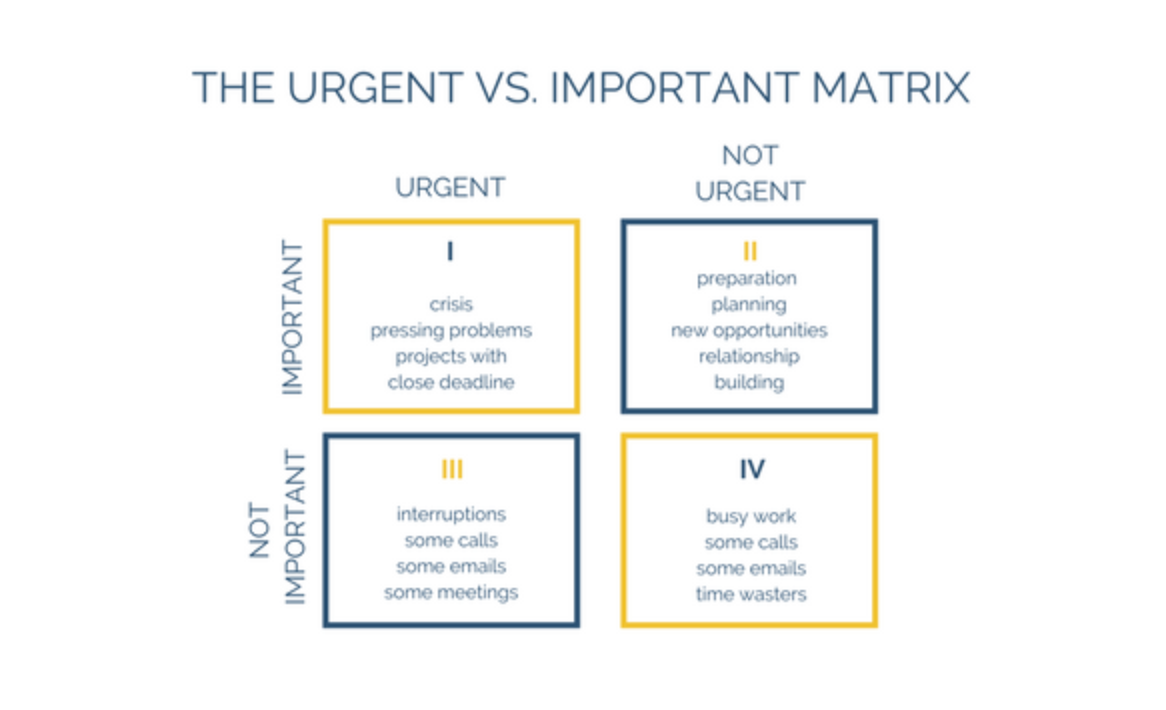
We all want to succeed. We want our hard work to pay off, and we dream of the benefits yet to come. But in the present, we’re consumed by the immediate and the urgent.

Putting out fires takes up time and energy we could otherwise devote to fireproofing the walls or fixing the faulty stove. We prioritise the urgent over the important.

You know this logically, but what do you do about it?

You don’t have time for the strategic thinking in sector 2 because you’re overwhelmed by stuff that has to be done right now. You spend your time in sector 1 firefighting, at the mercy of whatever comes up in the moment. You’re on a hamster wheel of busy work and you’re exhausted.

You think the future stuff can wait. That’s a mistake you can’t afford to make.

Here’s how to shift your focus.

The Seed Is Not The Tree — Yet

Every tree begins as a single seed. The seed needs the right conditions to develop. But properly managed, it will grow into a plant many times larger than the seed it sprouted from.

The biggest input into growth is time. Given enough time, growth can be amazing.

We underestimate the power of compounding.

The chart shows the difference in return from investing the same amount of money at different times, with the same growth rates. The earlier you start, the bigger your return when interest is allowed to compound over time.

In the same way, repeated daily actions add up over time. Whether you invest in yourself or in something external, starting early and persisting is the key to finishing your novel or building up a pension plan.

How can you get compounding to work for you?

You Have One Job

Don’t judge each day by the harvest you reap, but by the seeds that you plant.
Robert Louis Stevenson

There’s something small you can do which will more than repay the effort now. Its effects will build over time to get you much further along your path, whether your horizon is measured in days or decades.

You might think big gestures get the winner to the podium. But more often, building one small deed on another over time brings the biggest rewards. No deed is too small, provided we keep doing it.

If you draw an apple every day, you’ll improve. If you write a story every week, you’ll improve. If you walk ten minutes daily, you’ll improve. With these baby steps you can go further each time, and eventually, things will take off.

Of course, you’ll feel like there’s no progress to start. You might get discouraged. Remember you will never reach the tipping point if you don’t keep moving.

Do one thing your future self will thank you for. Repeat regularly.

  • Write 250 words on your current project
  • Exercise for ten minutes
  • Read a chapter of that book you meant to finish
  • Wear sunscreen
  • Plant something — a tree or a window box
  • Save whatever you can afford each month — if only spare change
  • Paint or draw a small picture

Any gardeners reading this will nod sagely, already thinking ahead to a new season in the natural calendar. Years ago I braved a bitter wind to plant a few bulbs that didn’t look like much. The pay-off was not immediate, unlike my frozen fingers. But now, with little to no extra effort, the flowers cheer up dreary winter days. And every year there are more.

So what will you do today, and tomorrow, and onwards to secure a better future?

Whether it’s saving £5 a week, or kissing your SO every day, you’ll be delighted with the return on your investment. Start now.

The law of harvest is to reap more than you sow. Sow an act, and you reap a habit. Sow a habit and you reap a character. Sow a character and you reap a destiny.

James Allen

blog, creativity, self improvement, writing

How to Turn Negative Feedback Into a Positive Experience

men s black and white long sleeve shirt
Photo by rawpixel.com on Pexels.com

A critic is a man who knows the way but can’t drive the car.
Kenneth Tynan

When was the last time you got negative feedback?
You’ve probably had comments on your writing, cooking, driving, or that shirt only you like. It doesn’t feel good.

Feedback is crucial to improvement. You only know what needs to change by assessing what does or doesn’t work.

Creative work of any kind exposes you to one-star reviews, lack of engagement, negative or offensive comments. You hoped for praise but got something unpleasant instead.

Alternatively, you might be working with a mentor or in a group of your peers, and actively seeking constructive comments.

You know feedback is a good thing. But do you always want it?

Candy or Broccoli?

Writers crave good feedback. You want to hear how much readers loved your characters, plot, and description. Positive feedback (I loved this!) feels good, but like eating candy, it isn’t nourishing on its own.

But despite the supposed benefits, we’re less keen on hearing negatives. Like broccoli or high fibre cereal, we know it’s good for us but it doesn’t taste good.

Negative feedback cuts to the heart of your self-esteem. If you’re too closely identified with your work (writing is my life rather than writing is something I do) criticism of your work feels like criticism of your core self. Then you attack in self-defence — either the critic or yourself. Both options are painful.

Reviews and comments are an accepted part of life. The only way to avoid them is never showing your work.

Fighters work with a sparring partner to build their strength and skills. Ask for help from a trusted source. Each time someone points out a defect is an opportunity to learn and do better next time. Take feedback on the chin and emerge with your self-esteem intact.

There are ways to make feedback both palatable and useful, whether it was invited or not.

Here To Help

The trouble with most of us is that we would rather be ruined by praise than saved by criticism.
Norman Vincent Peale

Constructive critique is aimed at the work.
It is factual. It focuses on objective measures using rational language.

Destructive critique is aimed at the creator.
It is opinion given in emotive language. It may not be relevant to the work at hand. It is personal.

What does constructive critique look like?

  • Timely — ideally given soon after the event
  • Focused — limited to one or two points
  • Objective — factual, uses respectful language
  • Specific — gives examples
  • Actionable — suggests targeted remedies


Poor critique:
What complete rubbish. You’re useless, my ten year old could do better than this.

Good critique:
I enjoyed the story but found this hard to read. The sentences and paragraphs were very long and it looked like a solid wall of text.

Consider having one idea per sentence and three sentences per paragraph. That gives more white space on the screen, which is easier to read.


The first example is pure negative opinion and offers no useful insight.
The second example avoids insults and emotive language and suggests remedies.

Whether you choose to take the advice depends on the source and the quality of the suggestion. But it gives you something to work with. The new version might work better or not suit your style. Either way, you know more than before, and can make more informed choices in your next piece.

Photo by Matheus Ferrero on Unsplash

Take It On The Chin

  • Allow time for strong emotions to settle
  • Look for a kernel of truth, no matter how small or hard to accept
  • Consider the alternatives presented
  • Be open to trying another way, even if you reject it in the end
  • If you decide to maintain your current position, know why
  • Thank your critique partner for their time and attention

Not every comment deserves a response. Sometimes you just note it and move on. Remember you are in charge of your words. You don’t have to accept all of the critiques or make all suggested changes. However, review from another source can be invaluable in showing a reader’s view, which you as the author cannot experience.

Put Up Your Guard

Endless negativity, especially if mixed with personal attack and vitriol, says more about the commenter than the work.

The internet is full of people whose comments consist only of slurs and insults. Sometimes they start by being pleasant and complementary; when you take the bait they switch to attack. Being targeted by an online and probably anonymous bully is a painful and upsetting experience. The answer is simple; don’t feed the trolls.

Don’t respond or engage in a flame war. Don’t stoop to their level.

You risk hurting your brand among observers, as a reputation is hard to build but easy to destroy. And you open yourself to a stream of negative feelings that persist long after the encounter.

You can close comments, mute, block or unfollow, depending on the platform. Often silence is the best response.

Open Your Mind

A common response to critique is to become defensive or aggressive.

I worked all night on that and you didn’t even give me any credit so what’s the point?

Well, what do you know anyway? I’ve got a postgraduate degree in X so I think I know what I’m talking about.

A good sparring partner exposes your weaker areas without attacking them outright. You wouldn’t spar when angry; it could turn into an ugly fight.

It might take some time to process the emotional hit, so take a breath. Remember that you’re here to learn. Nobody is perfect. Everyone can improve.

Learn to Love The Pain

The pain of discipline is nothing like the pain of disappointment.
Justin Langer

Exposing yourself to feedback more often is the best way to increase your tolerance of it.

No creative is immune to the sinking feeling when they see just how many changes they need to make to a piece. You’re allowed to feel bad about it as long as you keep the end goal in mind. Constructive critique builds the strength to do better work.

You Are Not Your Work

You put something of yourself into your creation, but please separate your sense of self from the thing you made. Critique of your work does not lessen your worth as a person. When you truly accept this, feedback is much easier to handle. Make another, a better piece using what you’ve learned.

You are not your work.

Everyone’s a Critic

Those who talk should do and only those who do should talk.
Nassim Nicholas Taleb, Skin in the Game

Dishing out negative reviews is easy. Giving useful critique isn’t easy. Like all good teaching, producing insightful analysis and actionable suggestions is harder than it looks.

So try writing a good critique by swapping with someone else. There are websites where you can submit your work for review, and earn credits by doing the same for others. It’s the tough love version of karma.

Follow the golden rule; be respectful.
Sharpen your critical skills, but not at someone else’s expense. Read other reviews to learn how to phrase your suggestions if you’re unsure. Even when you have points to make, imagine how your words would feel if you were receiving them. Empathy does not prevent you from being honest.

Whether you’re dishing it out or taking it, constructive feedback is central to your improvement and eventual success. You can learn to like broccoli. And dessert always tastes better after you’ve eaten your greens.

blog, Pat Aitcheson writes, self improvement

How To Achieve Personal Growth (Without Giving Up Everything In The Process)

Photo by Denys Nevozhai on Unsplash

Yesterday I was clever, so I wanted to change the world. Today I am wise, so I am changing myself.
Rumi

Raise your hand if you’ve tried self-improvement and failed at it? I have, more times than I can count.

I recall trying self-improvement but instead of gaining anything, I lost my way.

I started working with Finding Your Own North Star by Martha Beck. My life was super stressful with work and family challenges, and I felt defeated. The idea of resetting my internal compass was very appealing.

The book asked probing questions designed to reveal my true needs and aspirations. When I reached the chapter called Getting to Yes which asked me to create a best-case scenario for my life, I choked. Literally and metaphorically. I couldn’t go on, even though Beck had written about this exact reaction. Why?

Every positive scenario I thought of completely excluded the major elements of my life.

Whether it was work, family, or friends, I simply could not imagine how to improve my life without cancelling everything and starting with a clean slate. And I couldn’t cancel my life. So I was paralysed; unable to stay or go. I put the book away and tried to forget it.

Why couldn’t I change?

What Everybody Wants

I think we have a right to change course. But society is the one that keeps demanding that we fit in and not disturb things. They would like you to fit in right away so that things work now.
Anaïs Nin

I was bound by ties of duty to be a good doctor, wife, mother, sister, daughter, friend, boss, colleague, and more. But I didn’t want to sacrifice everything I valued for personal growth.

My only solution to this tangled Gordian knot of expectation seemed to be cut and run.

Expectation reduces the amount of thought we have to put into interactions. For example, you buy a sandwich every day from the same store. Both you and the cashier know roughly what to expect from each other, especially if you’ve met a few times.

Now imagine that the next time you hand over your money, the cashier asks you how you’re sleeping and what medication you take.

Or imagine that you visit your accountant’s office and find her painting in oils. She says, “Sorry, I didn’t finish your accounts because this is who I am now.”

Both these scenarios lead to puzzlement and/or anger on your part. Why is this person acting in a different role to what’s agreed, and who’s going to do your accounts now?

Everyone has a role they expect you to play, and it messes up their plans if you don’t go along with it.

If you don’t design your own life plan, chances are you’ll fall into someone else’s plan. And guess what they have planned for you?
Not much.

Jim Rohn

If you try to change yourself, you’ll find no shortage of people nudging you back into a place that feels comfortable for them. If you dare to step outside your box, society will discourage or even punish you.

Society runs on external validation and social proof, and it takes courage to chart your own path. When you do, you’ll find the people closest to you are confused. You act differently and they don’t know how to respond, so they try to bring you back in line with veiled or overt threats.

At some point on your journey, you’ll have to choose between what everybody else wants, and what you need. Are you ready to choose yourself?

Photo by Zachary Nelson on Unsplash
 

Never Alone

Even if you cannot change all the people around you, you can change the people you choose to be around. Life is too short to waste your time on people who don’t respect, appreciate, and value you. Spend your life with people who make you smile, laugh, and feel loved.”
Roy T. Bennett

You’ve probably read that you’re the average of the five people you spend the most time with, or you might lean towards the idea that it’s more dispersed than that. There’s definitely some influence, whether larger or smaller.

Imagine you’ve moved on. You don’t want to gossip over lunch or complain about your boss or otherwise play small anymore. But your colleagues are the same. You can’t change them. Habits are triggered by cues, so you decide to work out at lunchtime instead of going to the break room to whine. Which is great for your abs, but you just lost your social group at work.

Some self-improvement writers present this social drift as a virtuous circle. The more they improve themselves, the less they have in common with previous friends. So they find new, better ones more suited to their higher vibration. Which makes them even better, and so on.

That can come across as rather shallow and self-serving. Some relationships are temporary, but if you treat everyone as disposable you’ll never make lasting connections. Plus you risk finding yourself out of the circle once they move on, again. If you find it difficult to make new friends, discarding those you have has little appeal.

So can you change without giving up all your relationships and risking society’s scorn?

The Same But Different

People can’t live with change if there’s not a changeless core inside them.
Stephen R. Covey

Most people don’t want to sell all their possessions and go meditate in a cave in search of personal growth. Maybe you don’t have to reconnect with your first love on Facebook and leave your husband and children behind to find happiness in life.

You want to live a truer version of yourself, not throw the baby out with the bathwater.

Self-improvement is Michelangelo carefully cutting away all that’s inessential to reveal the glory of his David. It’s about finding the core of your self by discarding what no longer works and then living in accordance with your truth.

Change is evolution, not revolution.

Taking tiny steps and testing the waters is less daunting and likely to be more successful than a wholesale revision.

  1. Get clear about what you want to achieve. Finding the right guru is important, but you have to do the exercises in the books to refine your vision rather than just read without reflection.
  2. You will have to give something up to move forward. There’s no lesson in life that doesn’t cost something. Outdated ways of thinking and childhood programming are burdens you don’t need, but they can be comforting because they’re familiar and the unknown is scary.
  3. Reach out to your new tribe. Hang out where your people hang out. The internet makes this simple, no matter your location or interests. If you want to be a writer or a potter or a vintage car restorer, go find them. Lurk in online groups before introducing yourself and if the group isn’t for you, move on. The stakes are lower online, plus you still have your real life friends, right?
  4. Practise assertiveness. People will challenge your new behaviour. Don’t fold or apologise. When they accuse you of having changed, smile and say, “Thanks, I hope so.”
  5. Give yourself time to emerge. A snake sheds its old skin to grow only after the new skin has formed. It’s tender and delicate for a while and the snake will often hide until it feels safe again. Try out your new behaviours in sympathetic settings first. Read to your poetry group before entering a poetry slam. Visit the gym at quiet times before tackling that huge, intimidating spin class. Practise saying no to your annoying co-worker before your demanding boss. Note the response and adjust your aim next time.

Stepping outside the shared comfort zone of what’s expected will never be easy, but the pain of change is worth it. Approach with care, know the danger spots, and keep the end in mind.

Better to endure breaking down in the chrysalis and emerge a butterfly than refuse growth and stay a caterpillar forever.